Why comparing a day care centre feels harder than it should
Most Malaysia parents do not start with a neat shortlist. You start with a schedule that needs covering, a toddler who still naps unpredictably, or a baby who needs someone calm when the day goes sideways. Then the options blur: nursery, baby daycare, childcare centre, kindergarten school. Brochures sound similar. Prices look comparable until you ask what is included. The useful work is not hunting for a “best” label. It is deciding what to compare on the same visit day.
Early years matter because stimulation, responsive adults, and steady routines shape how children learn to explore. Guidance on early childhood development keeps returning to that mix of care and learning, not babysitting alone. When you walk a centre, you are really checking whether those conditions show up in ordinary hours, not only on open-day tours.
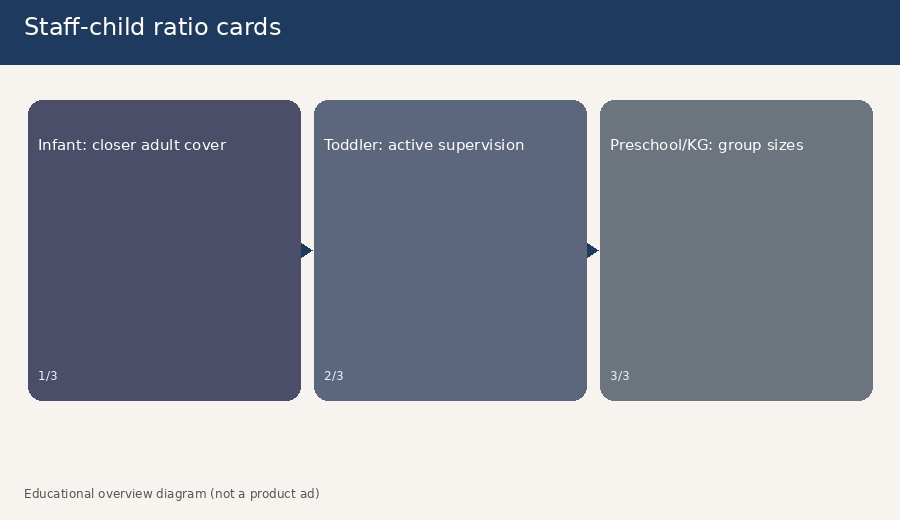
Staff ratios, group size, and what they actually tell you
Staff-to-child ratio is the number of children each caregiver is responsible for at a given time. Younger children generally need fewer children per adult because feeding, naps, hygiene, and soothing cannot be batched the way circle time can. Quality frameworks used by early childhood bodies, including the NAEYC program standards for families, treat appropriate ratios and group sizes as part of leadership and daily practice, not a marketing footnote.
On a visit, treat the published ratio as a claim to verify. Who covers toilet breaks? What happens when one teacher is on leave? Are infants and older toddlers mixed in a way that stretches attention? A quieter room with engaged adults often beats a flashy play zone that needs constant “shh” from across the hall. Parents comparing day care centre factors usually get further by watching interactions for ten quiet minutes than by touring every themed corner.
Also ask how the centre tracks headcounts during outdoor play and transitions. Ratio problems often appear in the handovers, not in the posed classroom photo.
Infant care pathways versus kindergarten readiness
A childcare centre is not one product. Infant care daycare is built around continuity of caregivers, feeding and sleep routines, and gentle sensory play. Kindergarten programmes lean toward social skills, early literacy and numeracy habits, and a clearer school-day rhythm. Families sometimes enrol expecting “learning” for a six-month-old and get frustrated when the day is mostly care. Or they pick a highly academic kindergarten for a three-year-old who still needs more guided play.
Map the pathway before you fall in love with a campus. Ask where children move after infant rooms: pre-nursery, nursery, then kindergarten. Ask how teachers hand over notes about sleep, language, or separation anxiety. For infants, good questions look like those listed in practical infant care pathway notes: who soothes, how parents get updates, and what “stimulation” means without over-scheduling a baby.
By kindergarten age, compare curriculum clarity and co-curricular balance, not just English branding. Malaysia’s policy conversation has been elevating preschool readiness nationwide, so a kindergarten stage overview that explains how play and structure share the week is more useful than a claim that every child will “excel.” Melaka families hunting “kindergarten Melaka” options can still use the same lens: pathway fit first, postcode second.
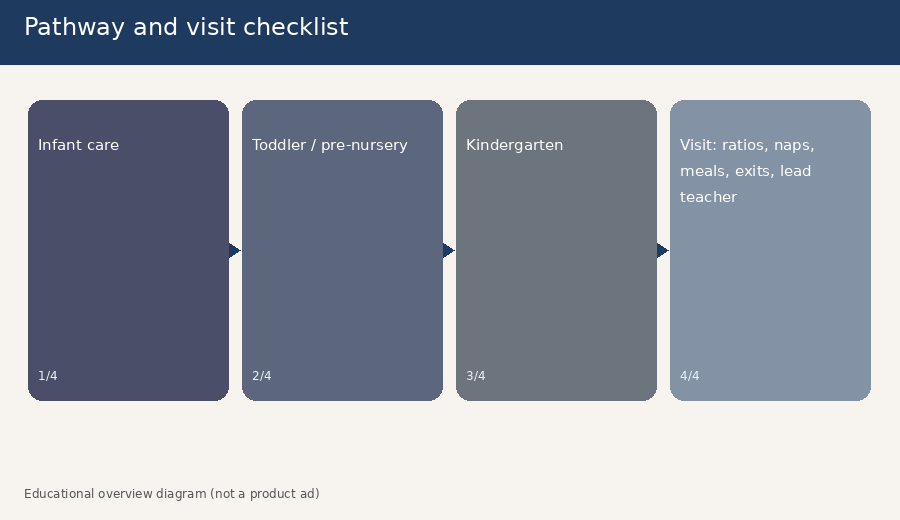
A visit checklist that survives glossy tours
Bring a short list. You will forget half of what you meant to ask once a cheerful guide starts walking and talking.
- Entry and pickup. Who can collect? Is the door actually controlled at busy hours?
- Hygiene you can see. Nappy areas, meal prep, handwashing habits after outdoor play.
- Daily rhythm. Outdoor time, rest, free play, and teacher-led moments in a realistic order.
- Communication. App, notebook, photos, or end-of-day chat? What happens when something goes wrong?
- Staff continuity. Turnover, relief teachers, and whether infants keep familiar faces.
- Fees with boundaries. Meals, diapers, registration, holiday closures, and late pickup rules.
Consumer education materials on supervision, ratios, and group sizes stress the same idea: structural numbers only help if adults can actually supervise. Your eyes and ears on a normal morning are part of that check.
A short official explainer on quality standards families can use as a comparison lens, not as a local accreditation requirement.
Decide with a narrow shortlist, not a forever promise
After two or three visits, score centres on the same five lines: safety habits, adult attention, pathway fit for your child’s age, communication style, and total cost of a normal month. Discard anything that only won on aesthetics. Keep one backup in case the first-choice waitlist slips.
Childcare costs and daycare prices vary across Malaysia cities; premium fees still do not guarantee better infant childcare or a stronger kindergarten nursery day.
If nothing else, leave each tour with one written observation about how adults spoke to children when they thought you were not watching. That note often outranks a long brochure when you choose a child day care arrangement your family can live with.